
Don’t Fence Me Out
Trump is refashioning Washington for an audience of one
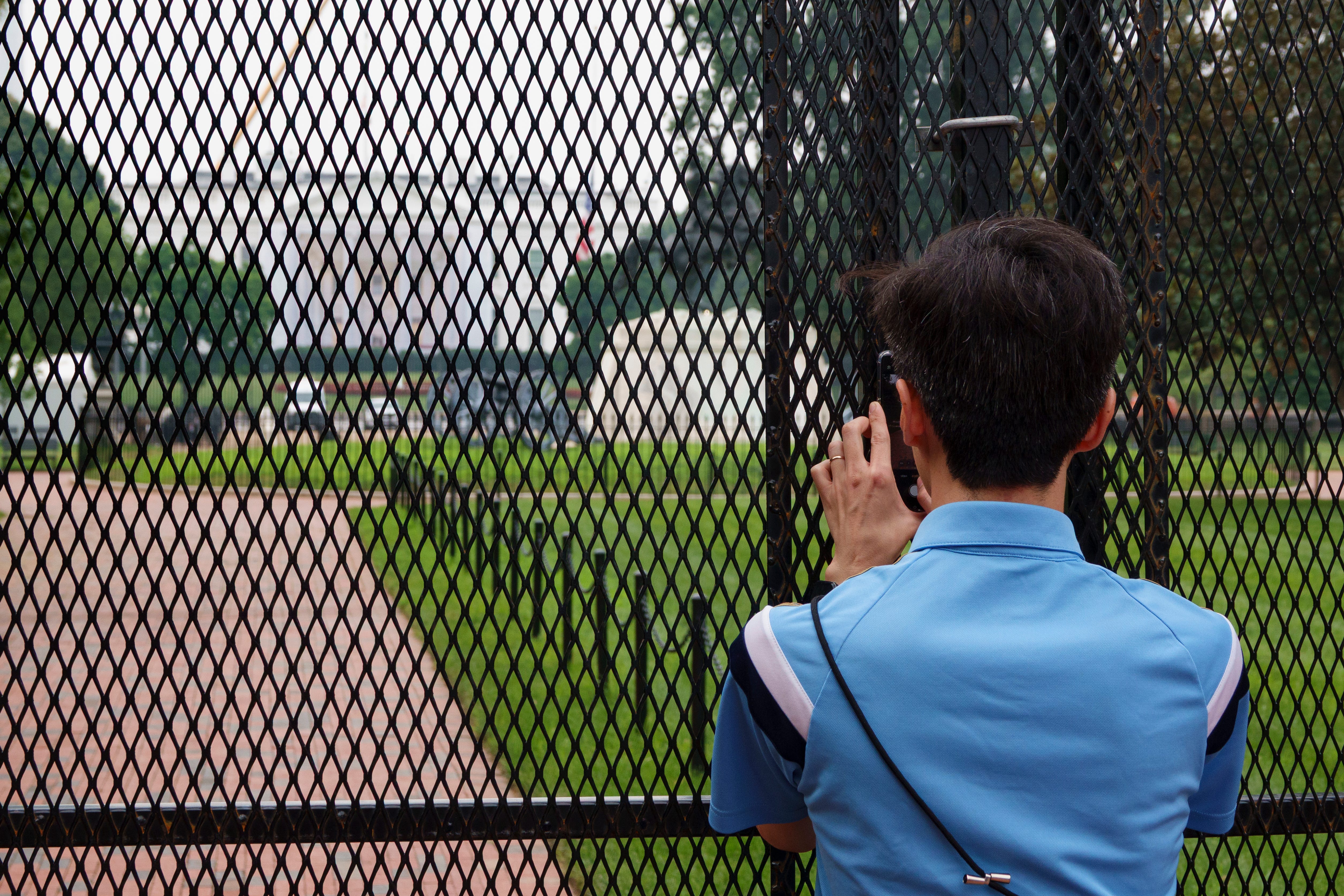
It is one of the most popular tourist destinations in America. Every year, millions make the pilgrimage to 1600 Pennsylvania Avenue to snap a photo or just take in the majestic view of “The People’s House.” At least they used to.
For as long as this reporter can remember, covering presidents back to Dwight Eisenhower, the White House fence along “America’s Main Street” was a place anyone could stand to peer through the wide, wrought-iron balusters and marvel at the building and all it represents.
Today, visitors can no longer get a clear view of the North Portico of the White House with its soaring Ionic columns. The best place to see the White House has been Lafayette Square. The seven-acre park, filled with lawns, shade trees and historical statues, is directly north of the White House and as close as a pedestrian could get.
Trump closed it in January, saying it was for repairs, landscaping upgrades, and security concerns ahead of America’s 250th Birthday celebrations. He encircled the park in “temporary” chain-link fencing. But weeks after the July 4th festivities ended, the park remains closed, and the fence remains up.
The visitors’ photo op location is now on the other side of the park, more than 500 feet from the old spot, where Trump erected another fence that’s about as transparent as he is. The above photo shows the new, obstructed view of the White House.
That fencing would be right at home surrounding a prison.
President Bill Clinton closed a two-block stretch of Pennsylvania Avenue to cars in the 1990s, making it a pedestrian mall. But the current president apparently doesn’t want anyone that close. As is often the case with Trump, there is another, more insidious reason for his seemingly innocent directives.
The park is known as “ground zero for protests.” Since the early 20th century, Lafayette Park served as one of the most popular places for peaceful assembly because of its proximity to the White House.
It is outlined in the official designation of the Lafayette Square Historic District. “The importance of Lafayette Park as a place where people exercise their First Amendment rights has been affirmed by the nation’s courts at all levels.”
The first picketers in the park were suffragists, seeking the vote for women in 1917. The park has seen activists supporting civil rights, gay rights, and nuclear disarmament, while protesting lynchings, the Vietnam War, and Trump himself.
Which may be why the White House and the Secret Service recently presented a 79-page plan to the Commission of Fine Arts — stacked with Trump toadies — to erect a permanent 10-foot metal fence, allowing authorities to close the park during “heightened conditions.”
To make it even more difficult to see the White House, Trump plans to plant 47 additional trees in the park. “This would mean that residents and tourists alike would be unable to see the White House from any reasonable distance,” Michael McGill, a former member of the National Capital Planning Commission, told The Washington Post.
Permanently fencing off Lafayette Park is a slap in the face to American democracy. Peaceful protesting is a cornerstone of our national identity. Blocking access to the most recognizable place to assemble, to publicly oppose the government, and to hold the powerful accountable is detestable. But it is quintessential Donald Trump.
Distancing the White House proper from real Americans is an apropos metaphor for this administration. The “haves” are in charge. Everyone else must move along. The president doesn’t like unsightly things, especially protests outside his bedroom window.
The White House was first called the “People’s House” during John Quincy Adams’ presidency. That term seems almost quaint today. Trump has no interest in “the people.” He only cares about one person, himself. This fact has been made readily apparent in his role as renovator-in-chief.
In October 2025, Trump quietly erected a fence around part of the White House so that he could level the East Wing in secret. The historic section of the mansion was gone within a week. The only thing worse than bulldozing our history is replacing it with a gilded monstrosity. The planned 90,000 square-foot ballroom will dwarf the White House and cost taxpayers hundreds of millions of dollars. This after promises that the cost would be fully funded by private donations.
With no approval, Trump decided to renovate the beautiful North Portico, calling it “horrible.” Last month, he had scaffolding built and wrapped in tarps to hide repair work. He also determined that the White House needed a new helipad. Without telling anyone, he is having a large cement helipad built. He paved over First Lady Jacqueline Kennedy’s Rose Garden and replaced the Lincoln Bedroom bathroom’s iconic Art Deco green tile with white marble and gold fixtures.
His renovation projects are not confined to the White House. Trump had the Interior Department cancel a 50-year agreement with the nonprofit that managed public golf courses in Washington. He is closing one to redesign it. Trump is “updating” the Kennedy Center, and building a massive arch dedicated to himself.
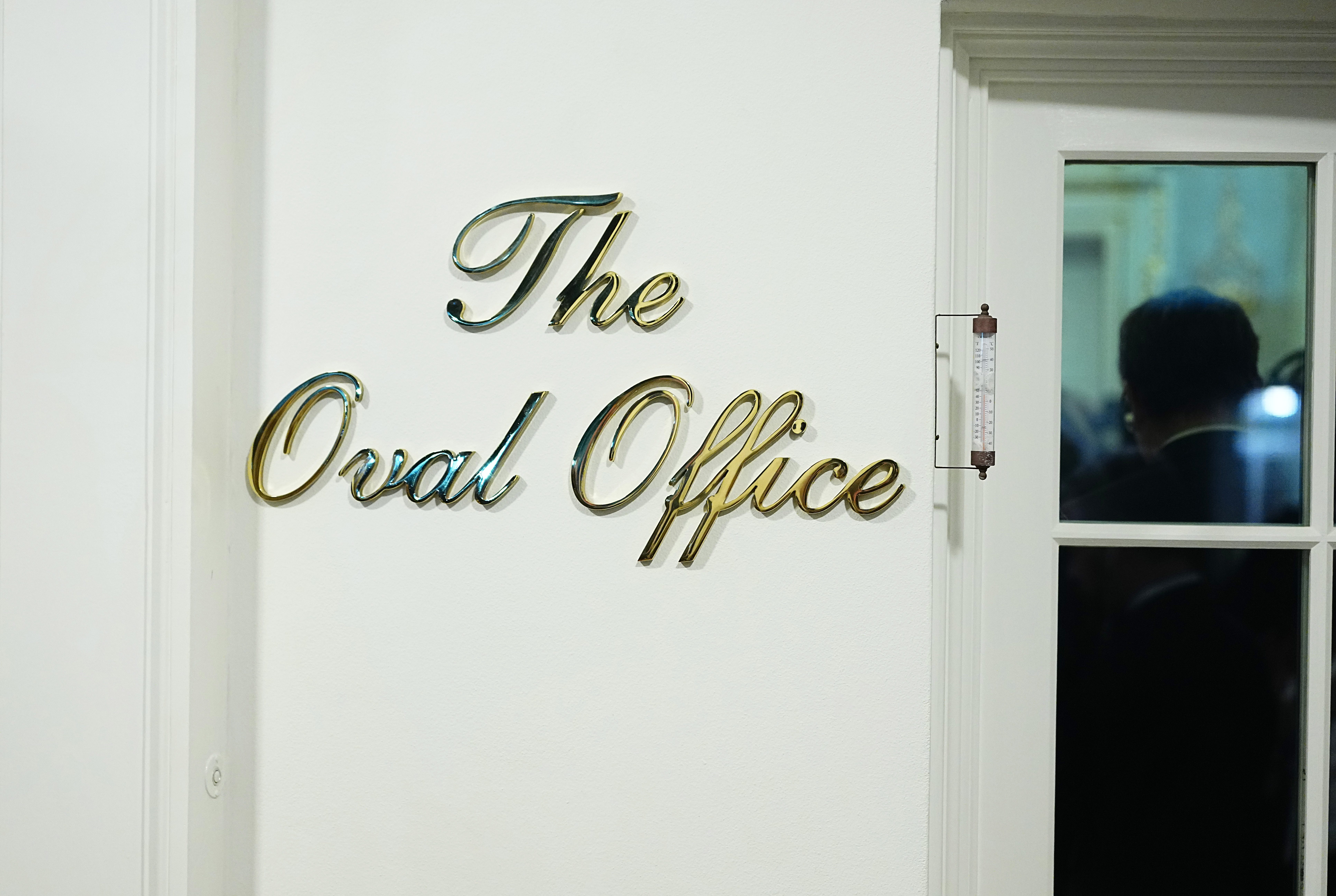
President George Washington said the presidency should embody “simplicity, propriety without luxury of ostentation.” We passed ostentatious many gold baubles ago. Trump’s signature style, gaudy gilt, now covers every inch of the Oval Office. He has also added scripted gold-lettered signs around the White House, perhaps to remind the 80-year-old president where he is.
Is this just an ego out of control? We heard an interesting theory from Maggie Haberman, The New York Times correspondent who may know Trump better than any other journalist.
“If you looked at a chart of his mind share… 70% of it would be on his renovations. It’s a legacy thing,” Haberman told her colleague Ezra Klein. “I always think of legacy with him differently than the way we usually use the word legacy. It’s not, ‘What am I leaving behind for the world?’ It’s, ‘What am I leaving behind so the world can’t kick me off the world?’ Or, ‘Deplatform me?’”*
Trump has a history of being deplatformed. Soon after he won the White House in 2016, many properties around the country and around the world were under pressure to remove the Trump name. This included two skating rinks and six high-rise apartment buildings in Manhattan, and hotels in Toronto and Panama. When the financially struggling Trump Soho Hotel took his name off the building, its fortunes recovered.
Trump wants to ensure his legacy projects are permanent, or as close to permanent as they can be. He is devoting extraordinary amounts of his time and your money to that end, because he fears that when his term is over, and he has shuffled off this mortal coil, Americans’ appetite to honor him will be scant.
* Haberman has a new book out written with her Times colleague, Jonathan Swan: “Regime Change: Inside the Imperial Presidency of Donald Trump.”
You are invited to consider supporting my team’s efforts to protect our democracy through the power of independent journalism by becoming a paid subscriber. It’s one of the best deals on Substack. I thank you for your support!
No matter how you subscribe, I thank you for reading.
Stay Steady,
Dan
Liz Cheney: “Someday Trump will be gone, but your dishonor will remain.”
I look forward to the "deplatforming" of him.