
The Unthinkable is Now on The Table
White House aide suggests Trump wants to suspend due process
With congressional Republicans marching in lockstep, Donald Trump has quickly demonstrated he can do whatever he wants, challenging the courts to stop him. That is a very dangerous place for anyone and everyone living in America.
While we all should remain focused and steady, let’s clearly remind ourselves of what’s now at stake: our fundamental rule of law. It is not hyperbolic to say that the democracy we love and cherish is being threatened like never before — this after the Trump administration suggested suspending habeas corpus, the constitutional right that protects us from being detained without due process.
One thing learned during the last decade of covering Donald Trump: When you think he can go no lower, he finds a way. He has now hit what we can only hope is rock bottom. The Constitution guarantees everyone in the United States legal due process, not just citizens.
Trump dispatched his minions to float an idea that legal scholars and political pundits have called a “constitutional earthquake,” a “threat to American democracy,” a “drive for unchecked power,” and crossing “the line between freedom and fascism.”
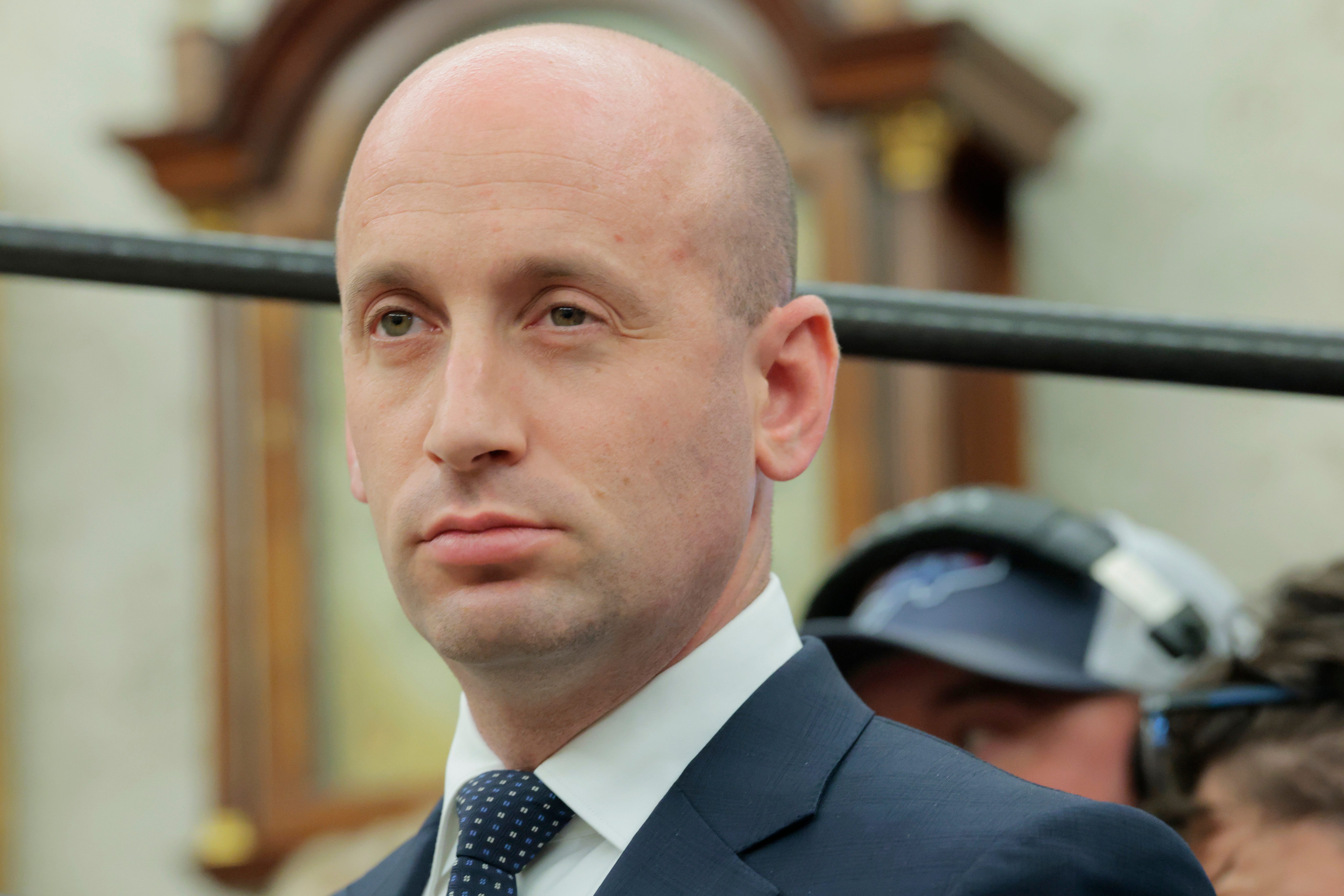
Last week, anti-immigration zealot Stephen Miller, Trump’s deputy chief of staff, told reporters that the administration is “actively looking at” suspending the writ of habeas corpus “to take care of the illegal immigration problem.”
Homeland Security Secretary Kristi Noem followed Miller, telling members of Congress, “This is the president’s prerogative to pursue….” Actually, it isn’t, but more on that in a moment.
Habeas corpus requires authorities to “present the body”— the English translation of the Latin — to justify holding them.
The legal principle, known as the Great Writ, is one of the oldest, dating back to England’s Magna Carta, written in 1215. It was so important that the American Founding Fathers included it in the very body of the original Constitution because King George III was secreting away colonialists “beyond Seas to be tried for pretended offences [SIC],” where American courts had no jurisdiction. Sound familiar?
You might ask why Trump would take such a radical step. He believed the courts, stacked with many far-right judges — including ones he appointed — would rubber-stamp his unconstitutional acts. He was wrong. The courts have handed him defeat upon defeat, especially regarding detentions and deportations.
The Supreme Court, which has described habeas corpus as the “fundamental instrument for safeguarding individual freedom against arbitrary and lawless state action,” unanimously ruled against Trump twice in the last month, upholding a 2008 ruling that says habeas corpus applies to noncitizens being held at Guantanamo.
Trump operative Miller minced no threats. “So, it’s an option we’re actively looking at. Look, a lot of it depends on whether the courts do the right thing or not.” In other words, if the courts get in line and ignore the rule of law, the administration won’t have to.
Miller did get one thing right when he said, “Well, the Constitution is clear, and that of course is the supreme law of the land.” Though the second half of his quote is, at the very least, incomplete: “that the privilege of the writ of habeas corpus can be suspended in a time of invasion.”
“His argument is factually and legally nuts,” Georgetown University law professor Steve Vladeck told Ruth Marcus of The New Yorker. There are two clear avenues to fight Trump on this.
One: Who has the power to suspend habeas corpus? The Framers included it in Article 1 of the Constitution, among the powers given to Congress, not the president. In 2014, even Supreme Court Justice Amy Coney Barrett, then a law professor, endorsed this position.
Two: When can habeas corpus be suspended? The Constitution says: “The Privilege of the Writ of Habeas Corpus shall not be suspended, unless when in Cases of Rebellion or Invasion the public Safety may require it.”
We are facing problems on our southern border, but it is not an “invasion.” More importantly, there is no widespread threat to public safety, no matter the lies Trump and Co. are spewing to justify their unlawful acts.
“The whole point is that the default is for judicial review except when there is a specific national security emergency in which judicial review could itself exacerbate the emergency. The emergency itself isn’t enough,” Steve Vladeck wrote.
While it is clear Trump has no real legal leg to stand on, and the courts have so far agreed, it is important not to get comfortable. The slope is incredibly slippery if Trump gets his way.
If “invaders,” aka immigrants, can be taken into custody without due process — no charges, no lawyer, no court appearances — what is to stop Trump from doing it to anyone he deems a threat? Perceived political enemies? Lawyers? Journalists?
In authoritarian states, those who dissent can suddenly disappear. How must those who’ve fled oppressive regimes to seek sanctuary in the United States feel now? The very real possibility exists for anyone — anyone — to be detained indefinitely.
Even Republican Senator Thom Tillis warned Trump that suspending habeas corpus could lead to “unintended consequences or some U.S. citizens getting swept up.” Not exactly earth-shaking criticism. There is an urgent need for more Republicans to stand up, and for more citizens to make their voices heard.
In one of the Federalist Papers supporting the new constitution, Alexander Hamilton wrote, “The subjecting of men to punishment for things which, when they were done, were breaches of no law, and the practice of arbitrary imprisonments, have been, in all ages, the favorite and most formidable instruments of tyranny.”
Tyranny. In America. Here and now. The threat is real.
To support my team’s efforts to protect our democracy through the power of independent journalism, please consider joining as a paid subscriber. It keeps Steady sustainable and accessible for all. Thank you.
No matter how you subscribe, I thank you for reading.
Stay Steady,
Dan
Can’t wait for Steven Miller to be the first at the Nuremberg trials.
Mr. Miller looks like the Third Reich officer whom he so aptly resembles in looks and deeds. The man is a Nazi...and quite dangerous.