
Redacting The Truth
Nothing to see here, or so Trump wants you to think
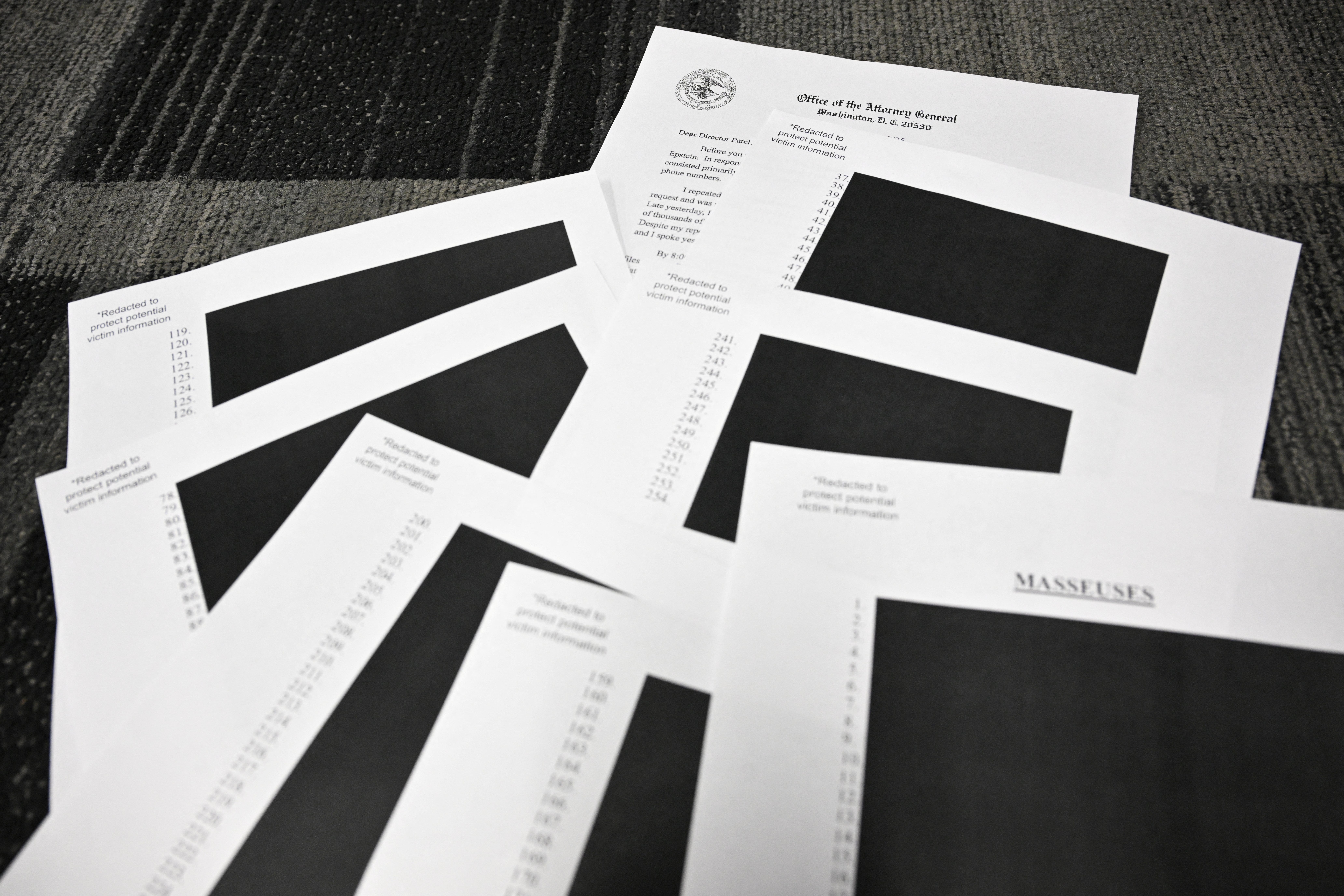
The story of Jeffrey Epstein and his sordid life, how he died and who helped him recruit girls and young women to abuse is horrific to contemplate and difficult to follow. That is by design. Those in high places don’t want you to know the truth. And we have a president, and longtime friend of Epstein, who doesn’t want you to care.
But you should. With every slow-walked release of documents related to the case, more questions arise — especially for the victims. There are as many as a thousand girls and young women, all deserving of justice, and to know who was complicit in their abuse.
If you haven’t been paying close attention to the news over the last few days, good for you. But we all need to be up to speed on where this story is and where it is going. Much to the dismay of the president, it is not going away.
Although the process has been haphazard, the information without context, and the release incomplete, it is a Christmas miracle that any of the Epstein files have seen the light of day, considering the Department of Justice is now an extension of the White House.
After doing everything in his power to suppress the files, including getting Speaker Mike Johnson to send the House home and not seat a duly elected Representative for seven weeks, Trump lost.
During the 2024 campaign, Donald Trump promised to release the Epstein files. He could have done it on Day One. He could have done it by executive order. Instead, he has denounced the content, deflected requests, and defamed anyone, including his own supporters, who pressed the issue.
Apparently, Attorney General Pam Bondi didn’t get the memo. In late February, she claimed she had the “client list” on her desk as she released 200 documents, ratcheting up excitement by labeling them “The Epstein Files: Phase 1.” Those files were anticlimactic, containing no new information. “Phase 2” never happened.
The vice president also seemingly wasn’t told to take his foot off the gas. “Seriously, we need to release the Epstein list. That is an important thing,” JD Vance said on a podcast in June.
Then suddenly, in early July, Bondi announced there was no “list,” that the DOJ was ending the Epstein investigation, and that Epstein died by suicide in a New York City jail. Case closed? Not so fast.
The uproar was loud and immediate and caused a schism in the heretofore rock-solid MAGA coalition.
While MAGA influencers from Candace Owens to Laura Loomer were expressing outrage with Trump over his handling of the Epstein “coverup,” as they called it, the House Oversight committee was gathering string.
On September 2, the committee released 33,000 documents it received from DOJ subpoenas. They sought all of the documents, but it is clear now that the committee got only a pittance.
November 12, the day the House came back in session after Speaker Johnson’s extended holiday, a House committee released a trove of documents it received directly from the Epstein estate. In one email, Epstein claimed the president “knew about the girls.” And he bragged that, “I am the one able to take [Trump] down.” That dump of documents prompted Trump to call for investigations into any Democrat in the files.
Finally, on November 18, the House voted to release the Epstein files. The Senate quickly followed. On November 19 Trump signed the Epstein Files Transparency Act, mandating release within 30 days.
On December 19, the DOJ did make public 100,000 heavily redacted documents, though they admitted it wasn’t everything. Thousands more were uploaded to the DOJ website on December 22, then removed, then released in a different order. More came out on December 24.
This disorderly, confusing, contextless, overly redacted process is likely by design.
Trump’s name appears hundreds of times. Though he posted in January 2024 that he was “never on Epstein’s plane,” the newly released documents show Trump traveled on the deplorably nicknamed “Lolita Express” at least eight times.
On Christmas Eve, the DOJ announced it had found a million (!) more documents possibly related to Epstein. The documents had been “discovered” in the New York FBI office and U.S. attorney’s office for the Southern District of New York.
Do the math and you will find that the 130,000 documents released so far, which by law should have been all of them, is one-tenth of what’s out there.
The DOJ said it “will take a few more weeks” to release the newly discovered tranche. According to CNN, Deputy Attorney General Todd Blanche’s office has asked for help over the holidays from U.S. attorneys’ offices to review and redact the new documents.
By law, only victims’ names and images are supposed to be redacted. Looking at the files that have been released, it is clear the DOJ has been liberal in its use of the black bar. On many pages every word has been blacked out. Conversely, in dozens of cases, victims’ names have appeared. Some survivors have accused the DOJ of violating the law and trying to intimidate them.
“DOJ did break the law by making illegal redactions and by missing the deadline,” Thomas Massie, Republican congressman and co-author of the Epstein legislation, said. The Justice Department has 14 days to explain any redactions.
One of the redactions that has drawn the most fire is a list of Epstein co-conspirators. Besides Ghislaine Maxwell, no co-conspirators had been identified prior to the release of the files this week.
Seven of the names were redacted. Jean-Luc Brunel, a French modeling scout and Leslie Wexner, founder of Victoria’s Secret and an Epstein client, were listed. According to a note from an FBI investigator, three of the co-conspirators were in Florida, one in Boston, one in New York City, and one in Connecticut.
“Although the files are overly redacted, they’ve already demonstrated that the narrative painted by [FBI Director Kash] Patel in hearings, Bondi in press statements, and Trump himself on social media wasn’t accurate. A complete disclosure consistent with the law will show there are more men implicated in the files in possession of the government,” Massie told The Atlantic.
Another heavily redacted section involves the documents related to Epstein’s stunningly lenient 2007 plea deal. After pleading guilty to prostitution involving a minor, he received a 13-month sentence, during which he was allowed to go to the office daily. During his work release, investigators found that he continued to abuse girls. The prosecutor in the case, Alex Acosta, later became Trump’s first secretary of labor.
So much was redacted that we will likely never get answers about how and why the plea deal happened, why it was a secret, and why Epstein received immunity, according to Julie K. Brown, the Miami Herald reporter who has long been at the forefront of the Epstein investigation.
Massie and his co-author, Democratic Rep. Ro Khanna of California, have said they have pushed for the release of the documents because they are seeking justice for Epstein’s victims. That justice has been far too long in coming.
The girls and young women who were abused by Epstein have been failed by the system for almost 30 years. The botched release of the files only further compounds the harm done to the victims, but still marks a step, however small, toward some measure of justice for them.
Steady is free, but to support my team’s efforts to protect our democracy through the power of independent journalism, we’d appreciate it if you would consider joining as a paid subscriber. It keeps Steady sustainable and accessible for all.
No matter how you subscribe, I thank you for reading.
Stay Steady,
Dan
I just finished reading “Nobody’s Girl,” Virginia Roberts’ autobiographical account of what she endured both at the hands of her father and Jeffrey Epstein. All of the victims of Epstein and his cohorts need justice.
Thank you for this.
Our attention needs to continue to be focused on the atrocities committed by Trump’s friends and, most likely, Trump himself.
May ‘26 bring indictments galore to all of the abusers.